
The Visit to Enschede
A reception at City Hall, reverence before the open Ark, and an inside tour of the iconic Menko cotton mills.
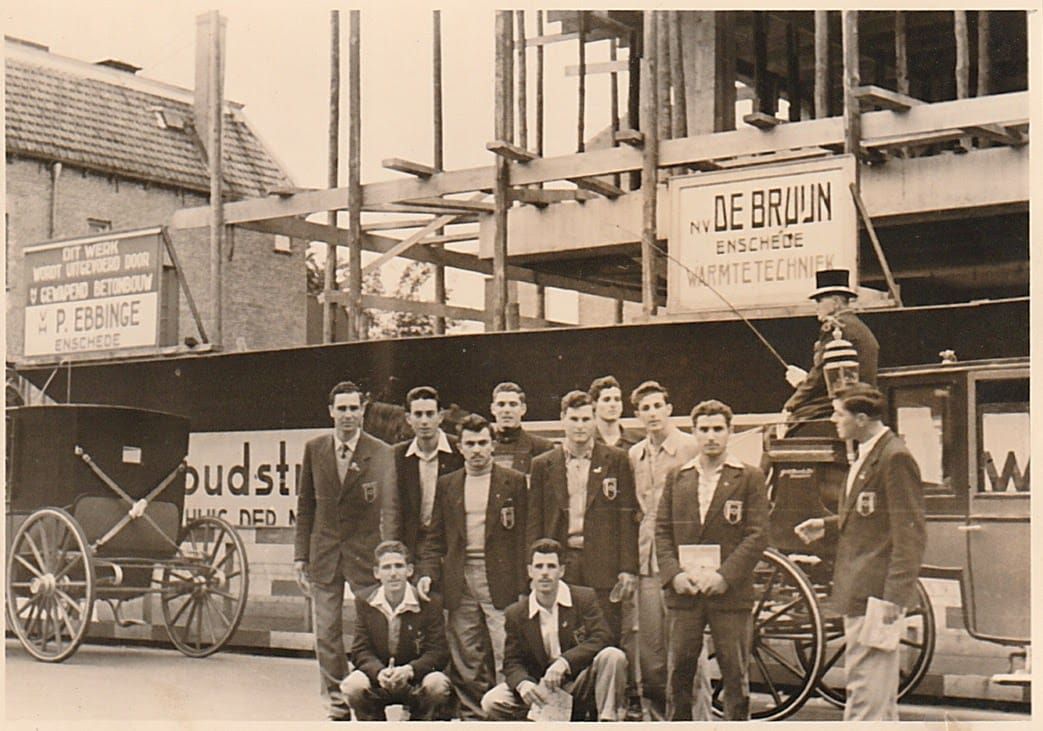
In his Tuesday 18.9.56 diary entry Gigi wrote:
In the morning we traveled to Enschede for a visit. We were received by the mayor.
We held a visit at the synagogue, one of the most beautiful in Europe. There
a festive meal was held for us. We visited the textile factory of a rich Jew, we received garments there. After that we returned to Hengelo.
The album traces the team's experience throughout that day.
Upon arriving in Enschede, the team took their first photograph in front of a traditional wedding carriage waiting for a bride and groom during their civil marriage ceremony inside the city hall (Stadhuis). These carriages typically parked directly outside the entrance. By custom, the groom arrived at the bride’s family home in the decorated carriage to collect her, before riding together across town with their witnesses to the Stadhuis, a lively, public procession announcing the wedding to the neighborhood.
In the Netherlands, civil marriage is legally mandatory. This requirement traces back to the French occupation in the early 19th century; in 1811, Napoleon introduced the civil registry (Burgerlijke Stand), establishing a strict separation between church and state and transferring the recording of births, deaths, and marriages from religious institutions to the authorities. Under Dutch law, a marriage is legally valid only when solemnized by a municipal registrar (ambtenaar van de burgerlijke stand) at a city hall or designated civic venue.
Couples desiring a religious wedding, whether in a church, synagogue, or mosque, must complete their civil ceremony at the Stadhuis first. The religious service serves purely as a spiritual blessing and carries no independent legal standing; in fact, officiants are legally prohibited from conducting a religious ceremony without verifying the civil marriage certificate beforehand.
Because the civil service is the binding legal act, the couple entered the building to wed before the registrar or mayor. With the ceremony relatively brief, the carriage and horses waited outside by the doors or in the adjacent square. Once the marriage was registered, the newlyweds emerged, re-entered the carriage, and set off on a second procession through town, either toward a house of worship for their religious blessing or directly to their reception.
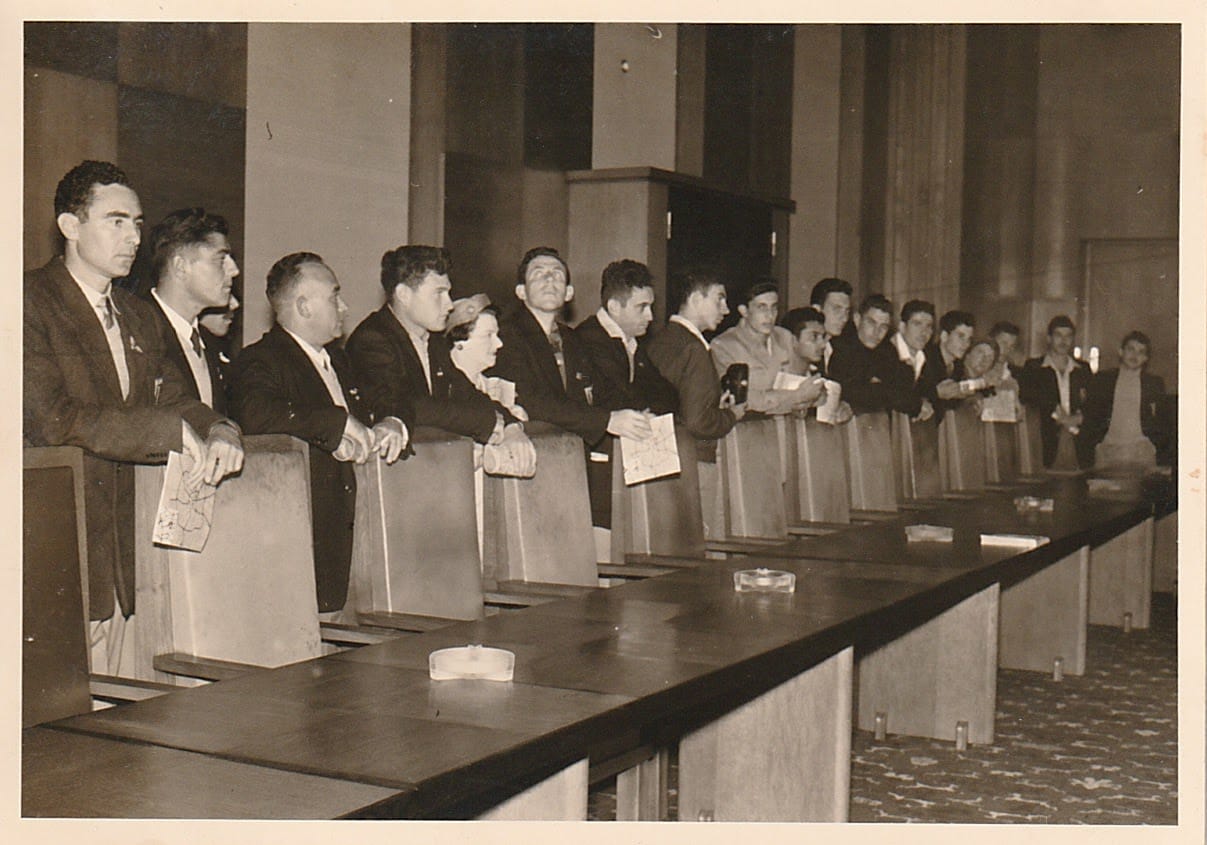
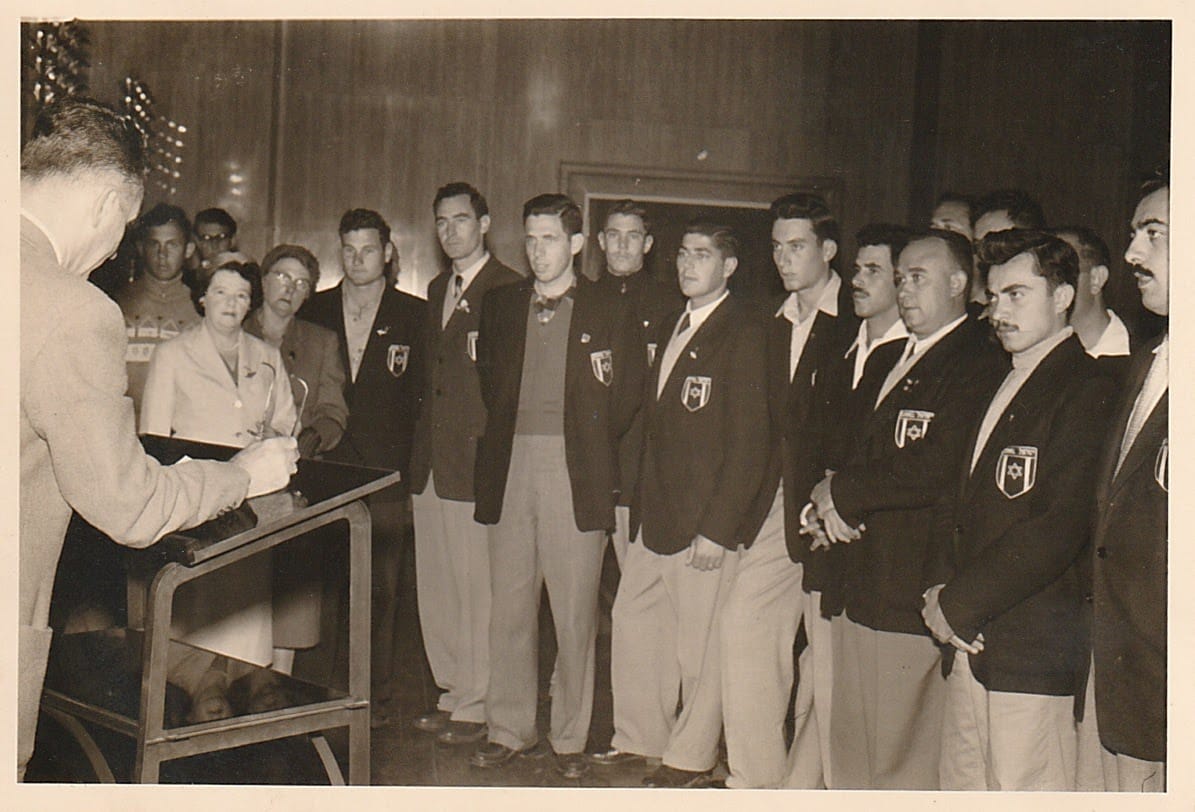
The reception at City Hall (left) and the Mayor's welcoming words (right).
The Mayor of Enschede from 1946 to 1958 was Meine van Veen. He played a pivotal leadership role in the postwar reconstruction of the city, which had suffered heavy destruction from two major bombing raids during the war.
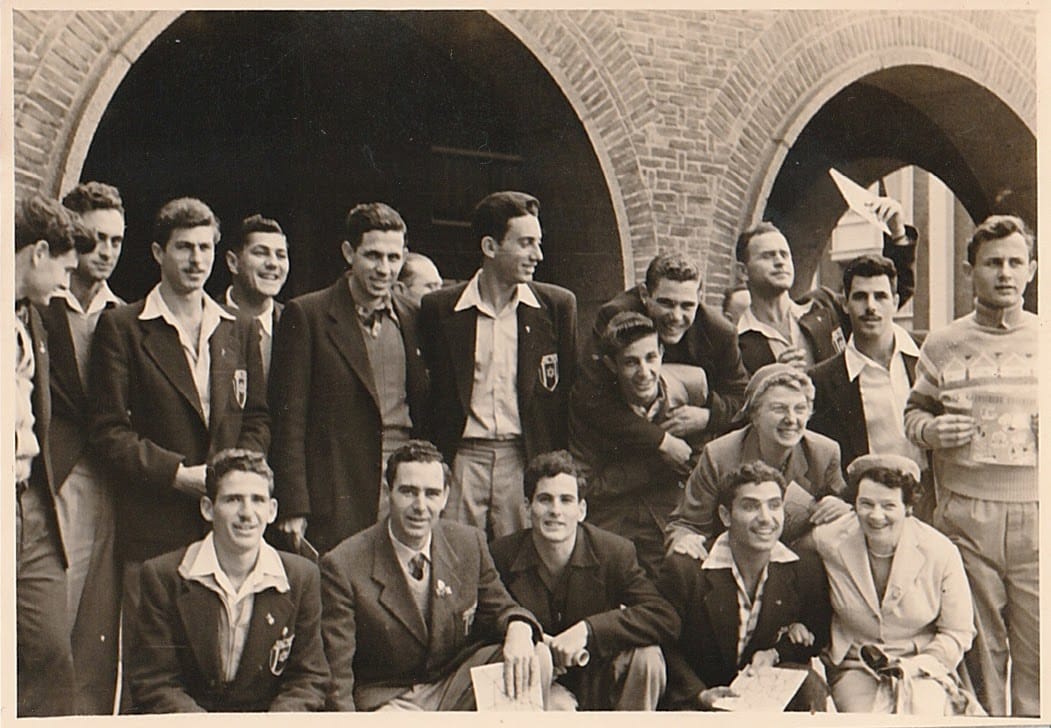
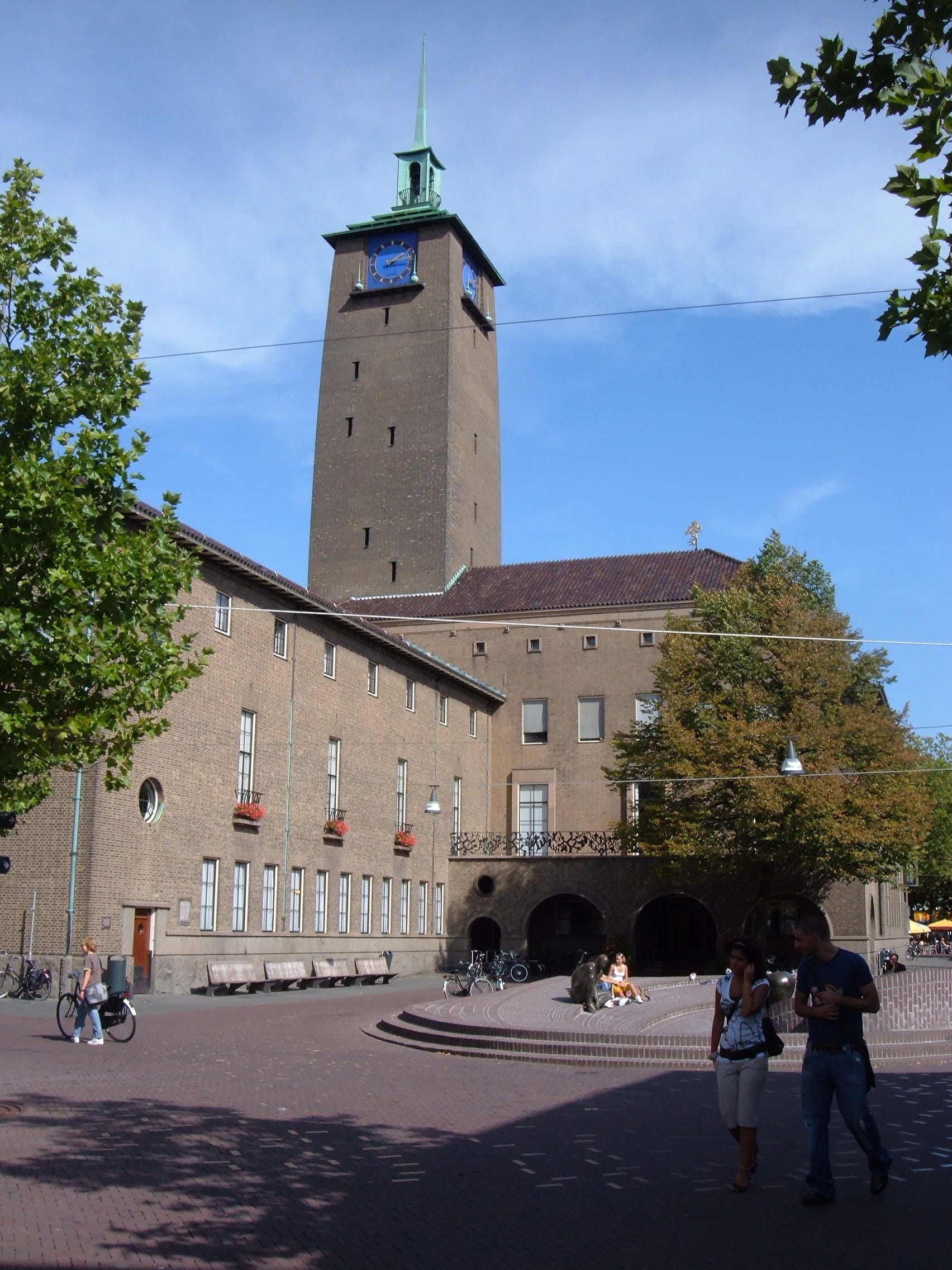
The team in front of City Hall (left) and the Stadhuis circa 2005 (right). Photo credit: Kleuske via Wikimedia Commons, CC BY 2.5
Before continuing to the synagogue, the team took a photograph in front of the Stadhuis. Back row (left to right): Tzurik Ben-Ari, Amnon Feldman, Amihud Shani, Hanan Sheibe, Moshe Nutman, Tuvia Cherni, Gigi Cohen, Moti Mokasai, Uzi Bashist, and Hagai Lachover. Middle row (left to right): Shaya Yarimi. Front row (left to right): Boaz Latvinovski, Uri Cohen, Imri Tov, and Eli Kapra.
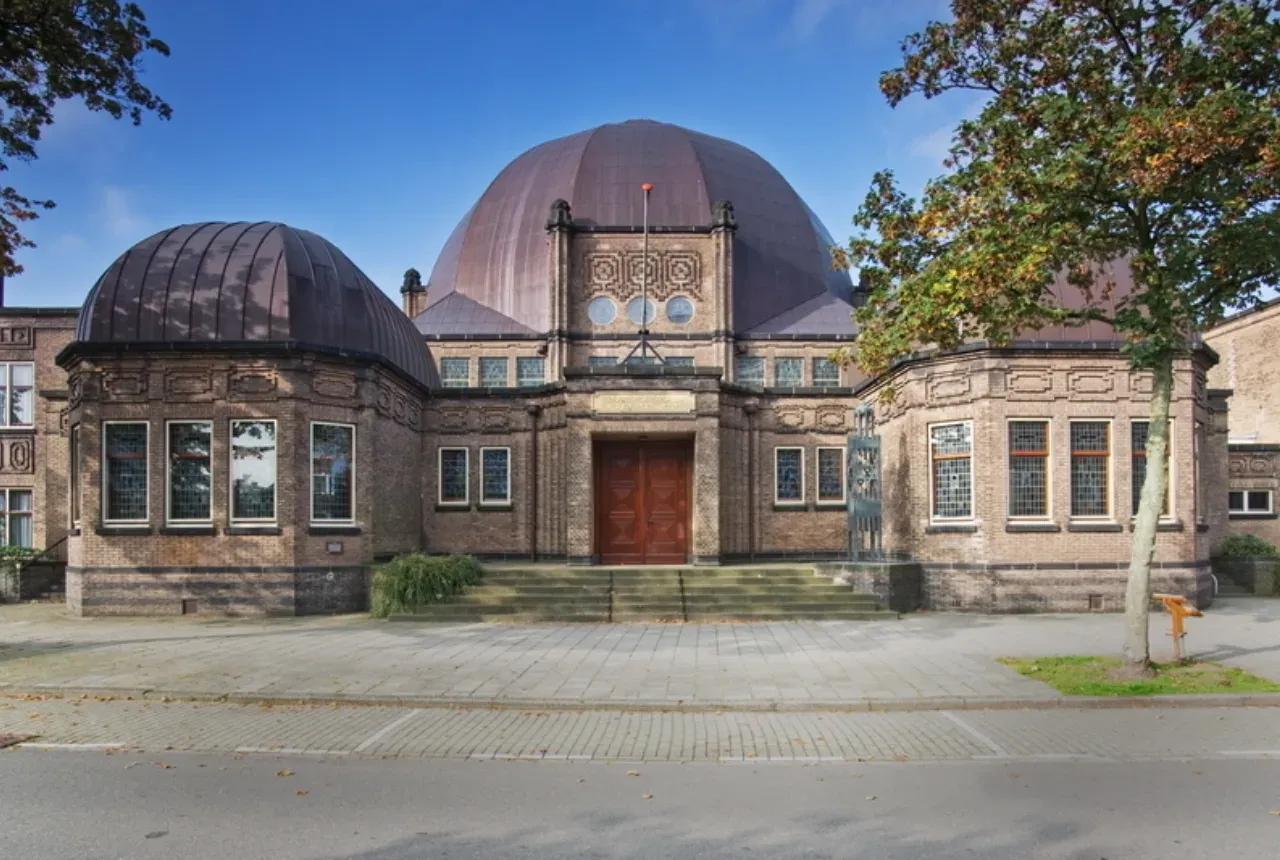
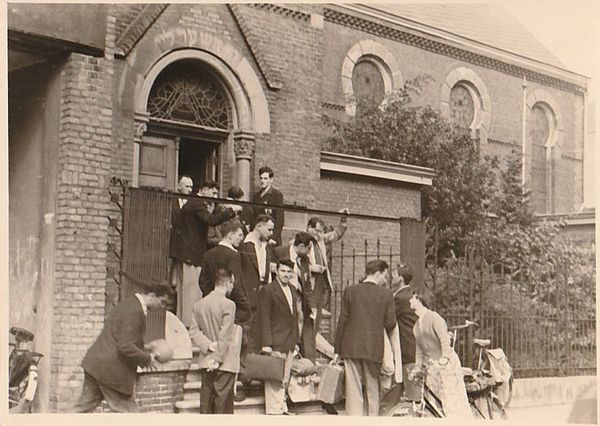
The Enschede Synagogue is widely considered one of the most magnificent in Western Europe. Built in 1928, it miraculously survived the war. Members of the local Jewish community managed to smuggle out and hide all nineteen Torah scrolls, carpets, and ceremonial valuables just in time, allowing the sanctuary to endure World War II virtually unscathed. Remarkably, its original, ornate interior remains largely preserved to this day, and it continues to serve as an active house of prayer.
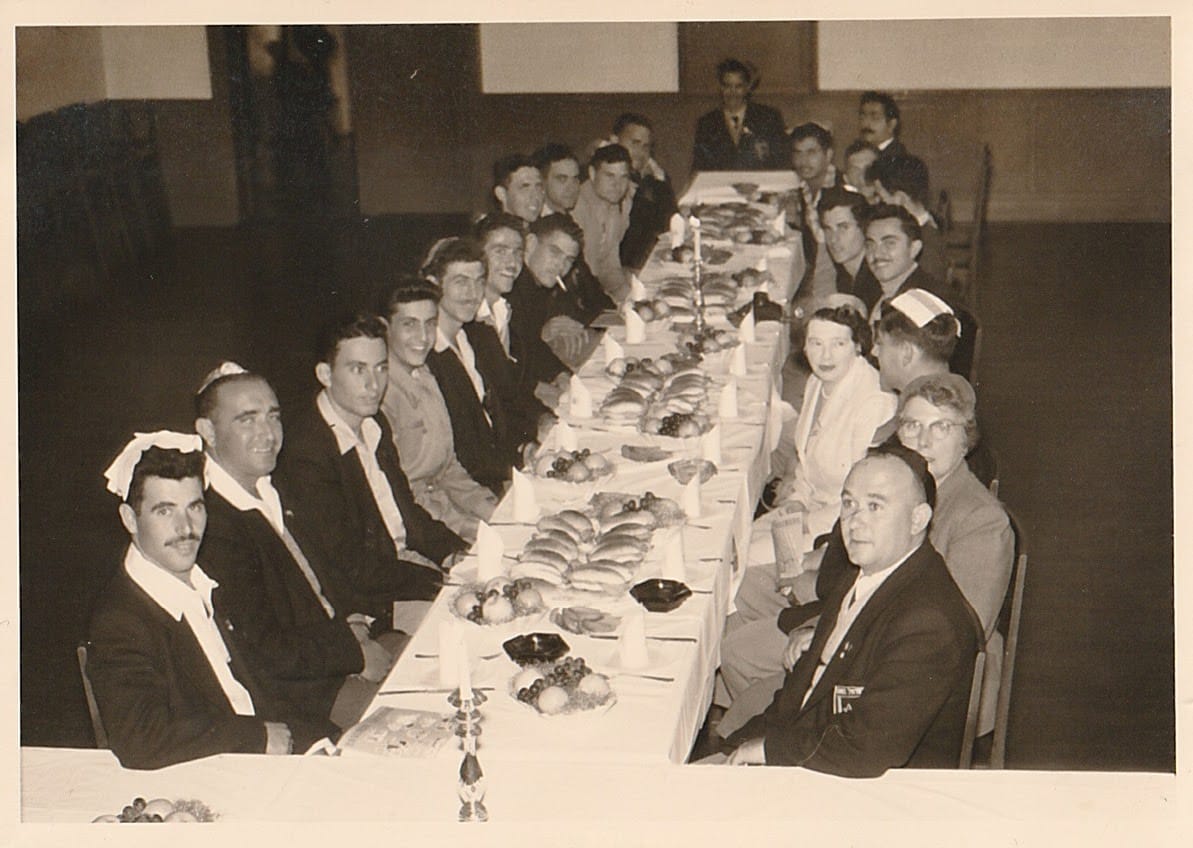
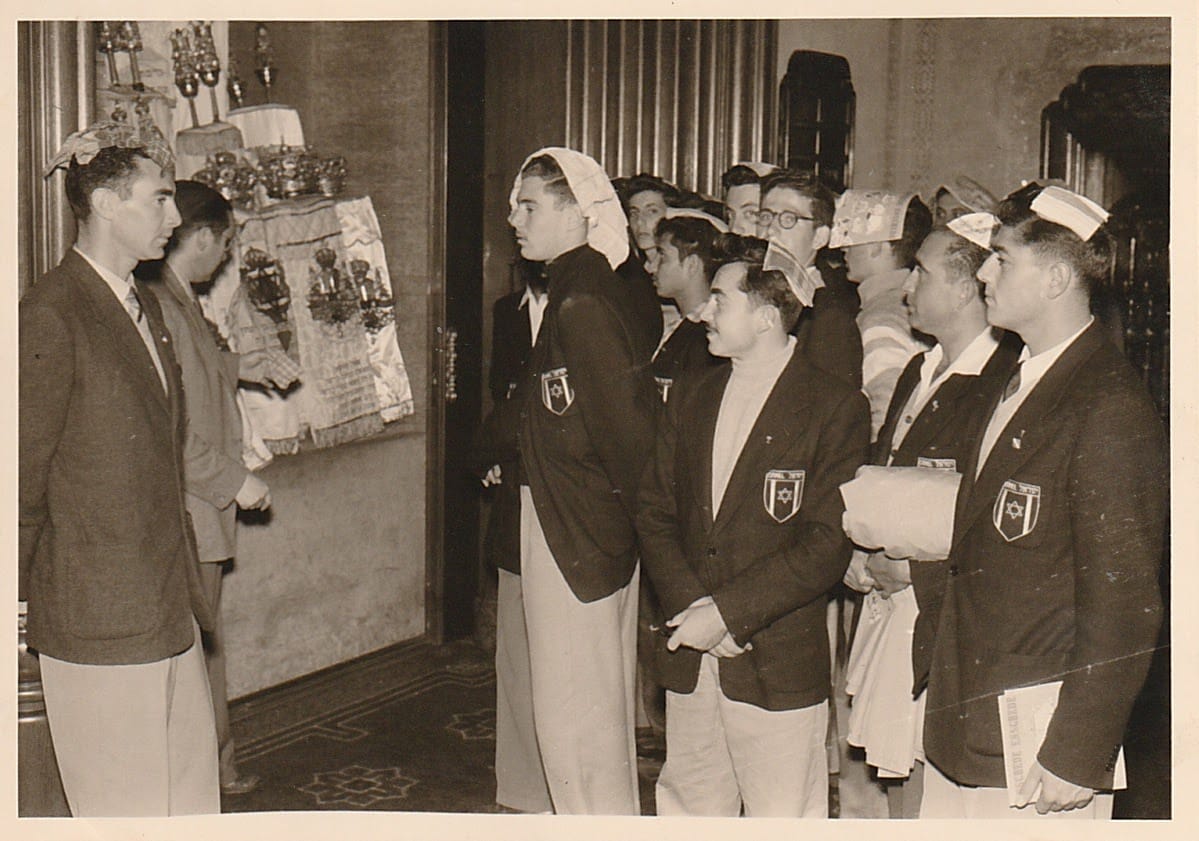
The festive meal (left) and gathering before the open Ark (right)
Almost none of the players had a kippah with them. Caught unprepared for a visit to a house of worship on what was meant to be an athletic tour, they improvised with whatever came to hand. Some neatly balanced folded handkerchiefs on their heads, others used the printed brochures they had just received at the town hall, and a few—like my father on the left, and my uncle Gigi in front—wore rather unidentified scraps or head coverings to show respect.
This visual improvisation speaks volumes about the generational and cultural world they came from. My father and uncle, like most of their teammates, grew up in secular, non-observant households where daily prayers and synagogue rituals simply weren't part of everyday life. For young Israelis of that era, the inside of a synagogue was largely reserved for milestone family occasions like weddings and bar mitzvahs, or perhaps a curious visit on Yom Kippur to hear the cantor (hazan). Standing before the open ark in Enschede, these secular athletes—proudly wearing their blazers with the Star of David—met the traditions of the European diaspora with genuine reverence, even if it meant balancing a city bulletin or a handkerchief on their heads.
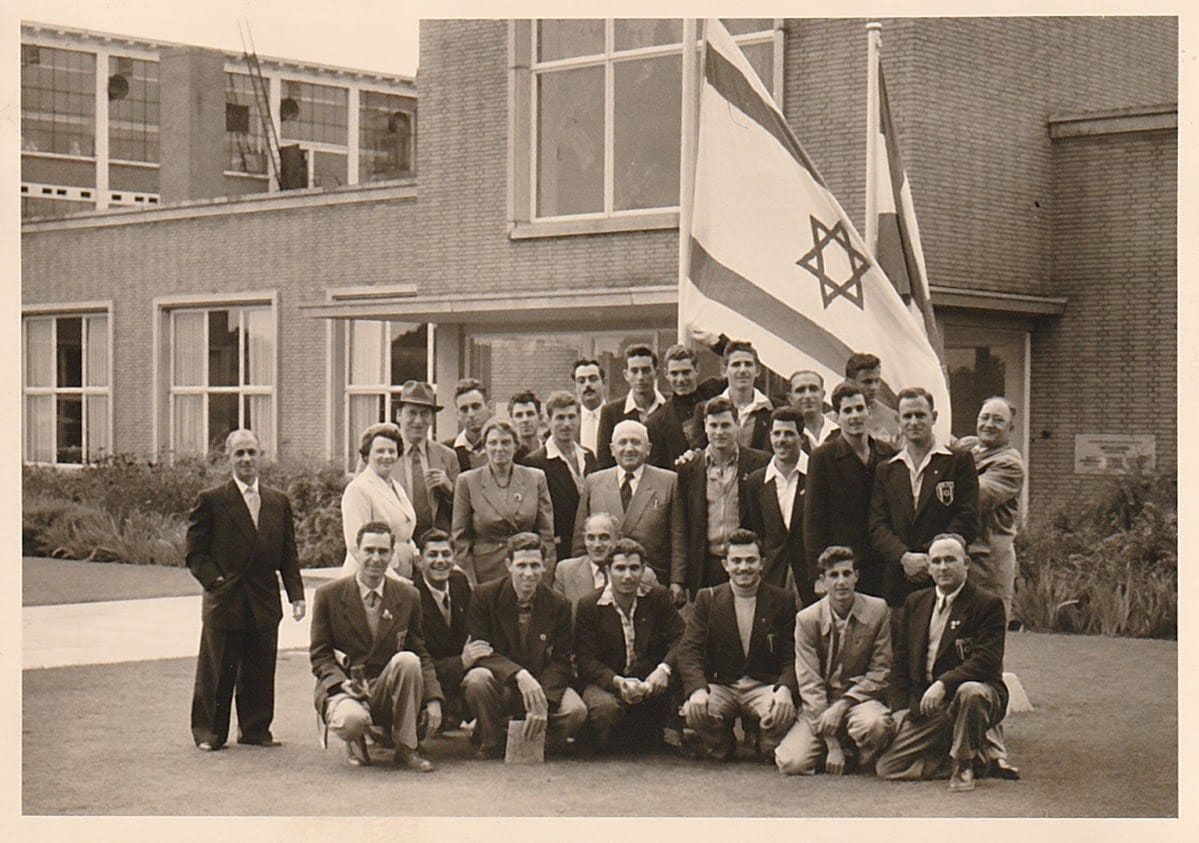
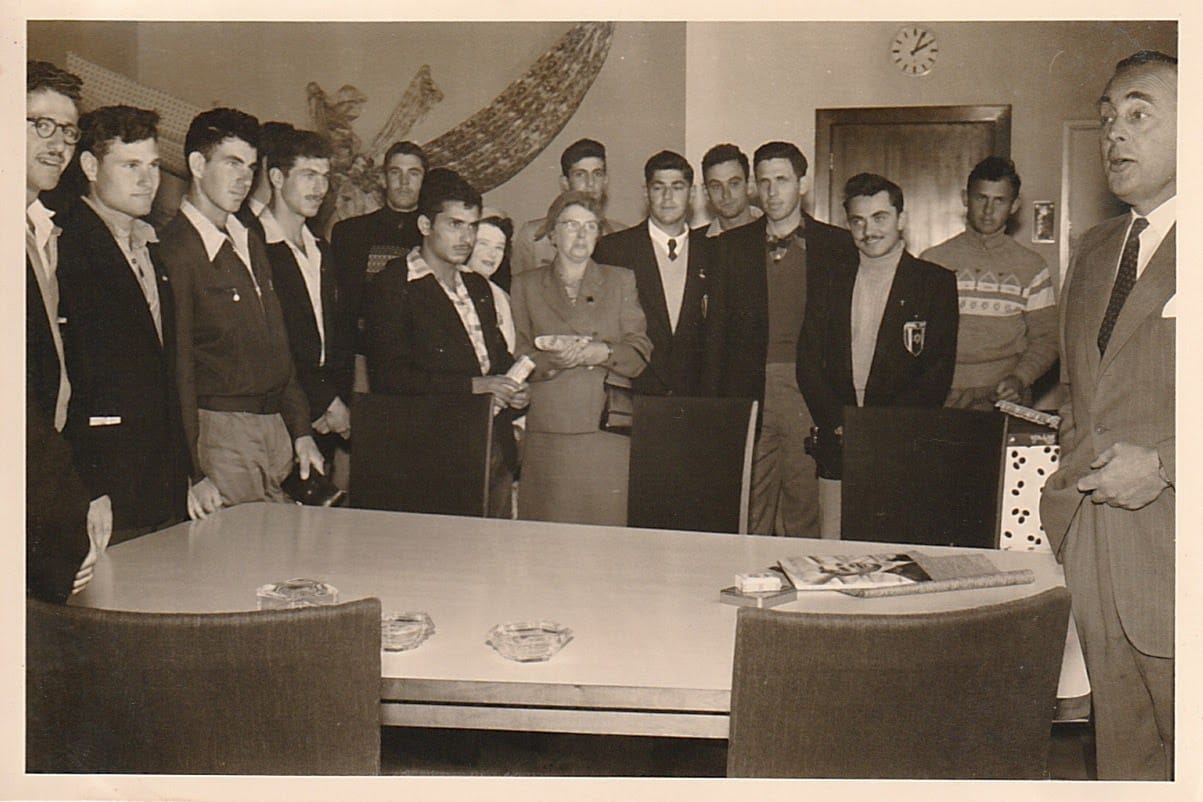
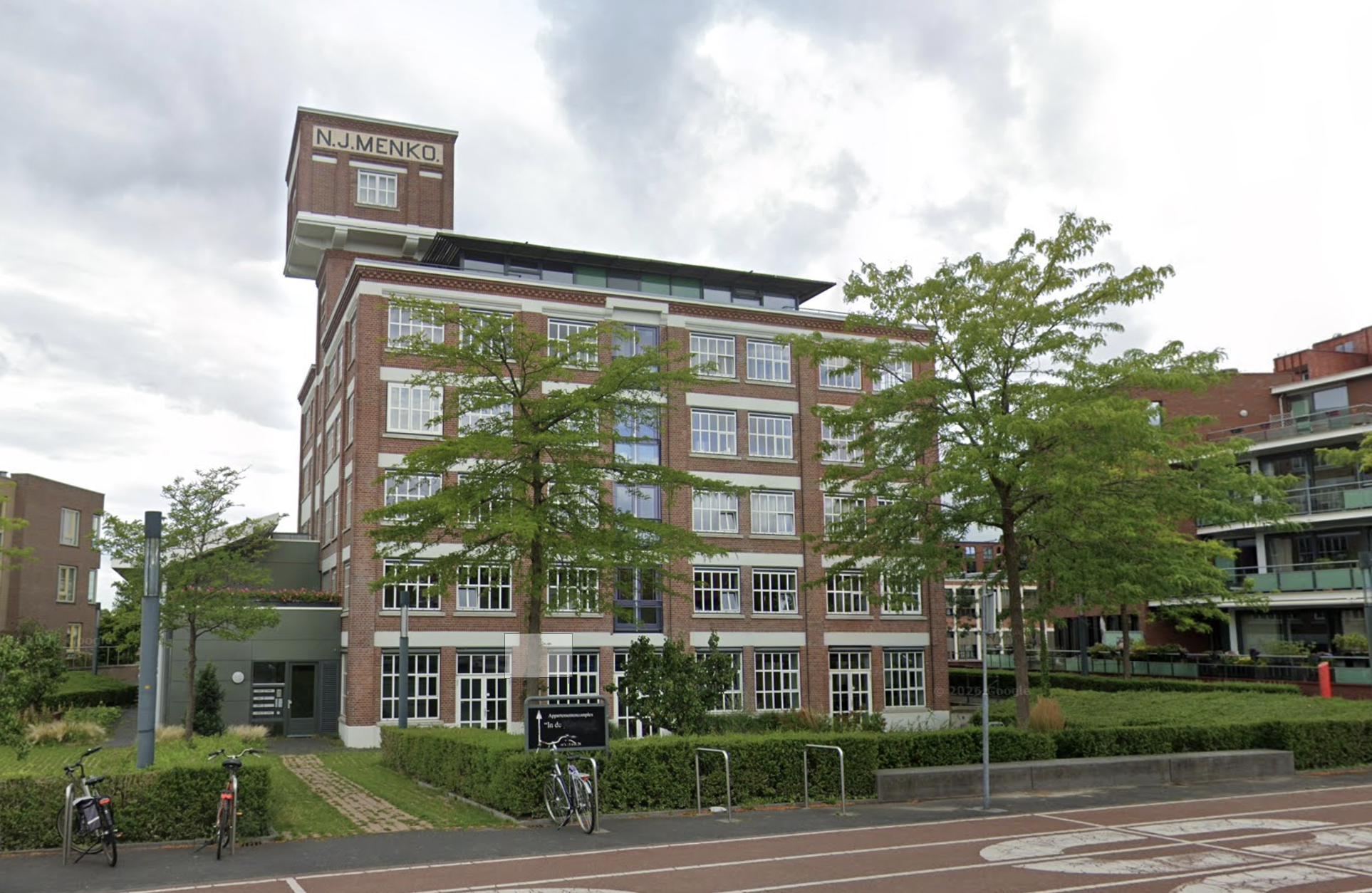
In front of the Menko textile factory (left) and during the reception in the boardroom (right)
During the late 19th and early 20th centuries, Enschede transformed into the beating industrial heart of the Twente region, earning widespread fame as the "Manchester of the Netherlands" for its dense landscape of roaring cotton mills, soaring chimneys, and innovative spinning technology. Much of this industrial boom was pioneered by prominent Dutch-Jewish families, foremost among them the Menkos, who built the N.J. Menko company into a leading textile enterprise.
During the German occupation of the Netherlands, the Jewish-owned company was seized and placed under Nazi-appointed administration (Verwalter), while members of the Menko family suffered persecution and deportations. Following liberation, surviving family members—notably Sigmund Menko, who survived the Theresienstadt concentration camp—returned to Enschede to reclaim their rightful ownership. They spearheaded an ambitious postwar reconstruction program: modernizing production, repairing war damages, and constructing state-of-the-art facilities, including a prominent new directiegebouw (headquarters) in the early 1950s, which restored the firm to the forefront of the Twente textile industry.
Like the rest of the Dutch textile industry, Menko could not withstand the global market shifts of the late 1960s, ultimately halting production in the 1970s. Decades later, the site faced further trauma when the catastrophic May 2000 fireworks disaster flattened much of the surrounding Roombeek district, yet key parts of the Menko complex miraculously survived. Rather than erasing this heritage, Enschede integrated it into one of Europe's most celebrated urban regeneration projects. Today, Roombeek has been reborn as a vibrant, modern neighborhood, where Menko's historic directiegebouw houses offices, the preserved cotton warehouse and water tower have been repurposed into contemporary apartments and cultural spaces, and the original ornamental factory gate stands proud in a public park as an enduring monument to the city's industrial past.
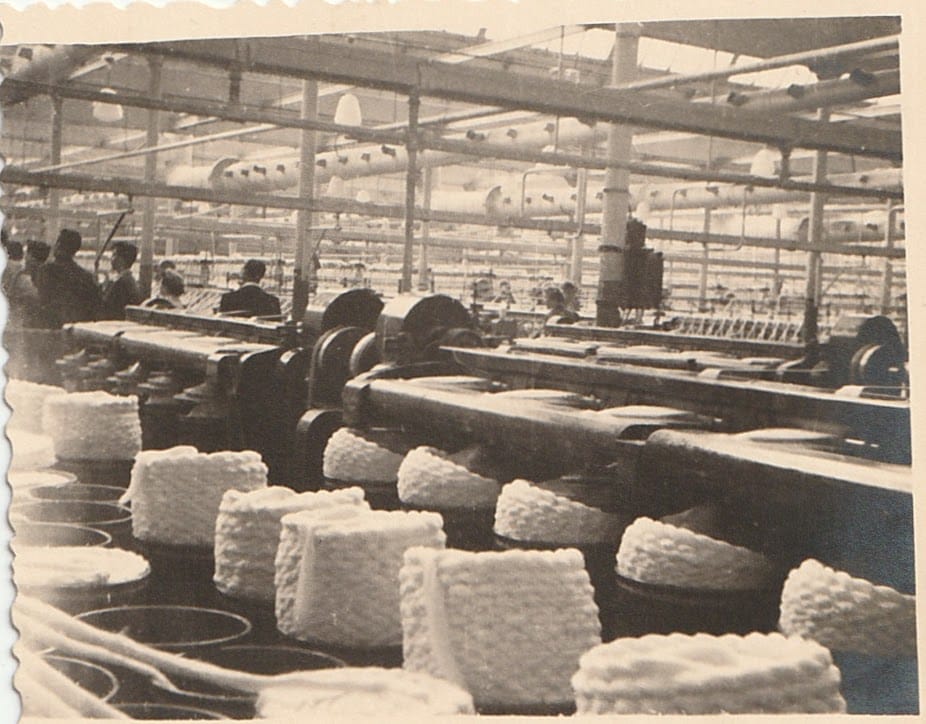
The photograph offers a rare look inside a mid-century industrial spinning hall, specifically the carding and drawing section (kaarderij). In the foreground sit large cylindrical collection cans filled with fluffy, neatly coiled spirals of "cotton sliver": raw cotton cleaned, combed, and aligned into continuous ropes ready for drawing. Heavy motorized draw frames stretch across the center of the hall, pulling and thinning these fibers before they are spun into thread. Overhead, an intricate network of ventilation and climate-control ducting hangs from the steel roof trusses, an essential installation in textile mills to extract combustible cotton dust and maintain the precise humidity levels required to prevent delicate fibers from snapping.
Leave a Comment
Do you recognize a player, a location, or have a story about this tour? Please share your knowledge below. You can comment using just a nickname—no account required.