
More about Gedulla's life
Beyond the testimony: Gedula's later years, and a glimpse into her youth through the pages of a Dutch-Jewish youth newspaper.
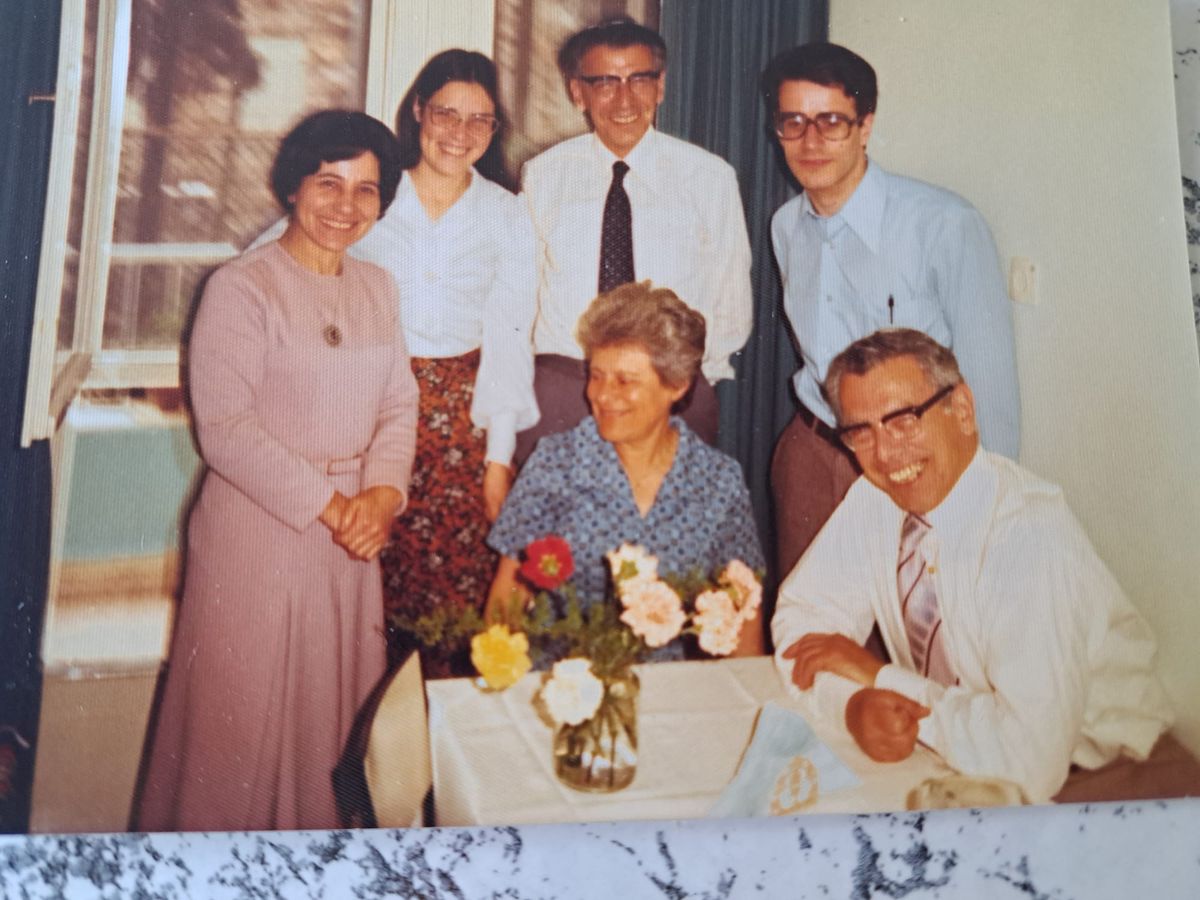
Gedula Menko met Levie Salomon Israels in the 1970s, not long after he immigrated from the Netherlands. Born in Wageningen in 1916 (a year older than Gedula), Levie studied at the Dutch-Israelite Seminary and attained the rank of maggied. He married Elisabeth Groothuis, and during the war, the couple went into hiding in Leeuwarden. After the war, Levie and Elisabeth had two children together: Chaggai (b. 1946) and Abby (b. 1948), and Levie worked as a religious teacher and spiritual leader for the Jewish community. Tragically, his older son, Chaggai, passed away in 1956. Levie and Elisabeth eventually divorced, and Levie made Aliyah by himself. More information about his life is available on the memorial page written by his son Abby for Joods Zwolle.
Gedula and Levie had a small wedding in the early 1980s, when both were in their sixties. The cover picture captures Gedula with her new family in their apartment in Jerusalem's Kiryat Moshe neighborhood, likely taken during Pesach on one of Abby's visits to Israel. Levie's brother Shlomo is sitting next to Gedula. Standing left to right are Shulamit, Shlomo's wife, their daughter Channah, Levie and his son Abby.
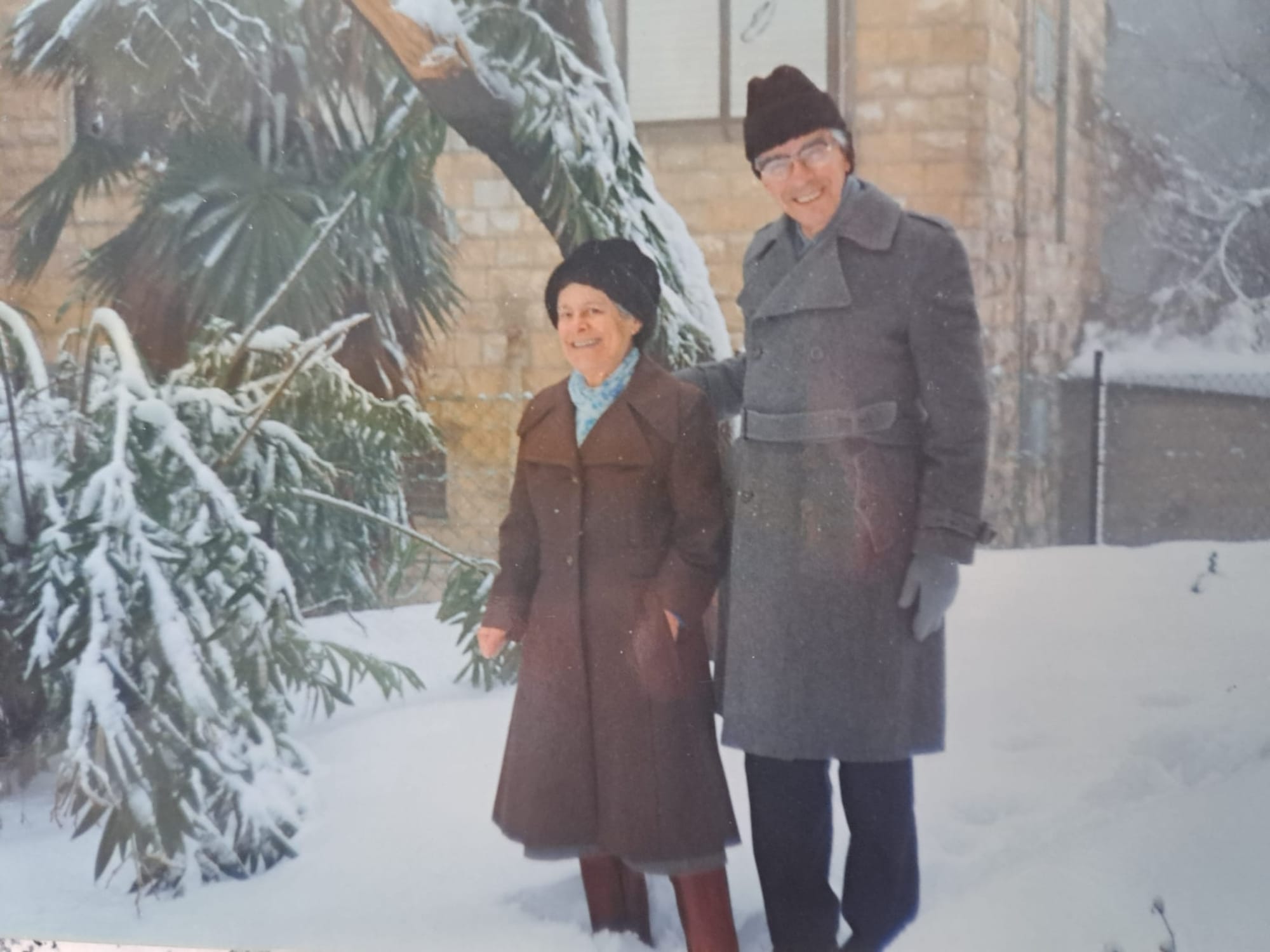
In their later years, Gedula and Levie moved to Beth Juliana, a retirement home in Herzliya established specifically for Dutch immigrants. Gedula passed away in 2000 at the age of 83, and Levie followed her just a year later. Gedula requested that no tombstone be placed on her grave.
In her youth, prior to the war, Gedula was an avid reader and contributor to the Jewish youth newspaper De Joodsche Jeugdkrant ("Betsalel"). Published in Amsterdam between 1928 and 1935, the paper was edited and primarily written by Rabbi Dr. Meijer de Hond. It was distributed to provincial towns only where a strong local branch of the Betsalel youth organization or an active orthodox community existed, such as Hengelo. In these provincial communities, the magazine served as a vital cultural lifeline, linking isolated local youth to broader Dutch-Jewish life.
De Hond held a unique ideological position. While he fought fiercely for the dignity of the poor, he strongly opposed both Socialism and Zionism. He did not believe in social revolutions or building a secular state in Palestine; instead, he believed that the ultimate salvation for the Jewish proletariat lay in a deep, traditional adherence to Orthodox Judaism and community solidarity.
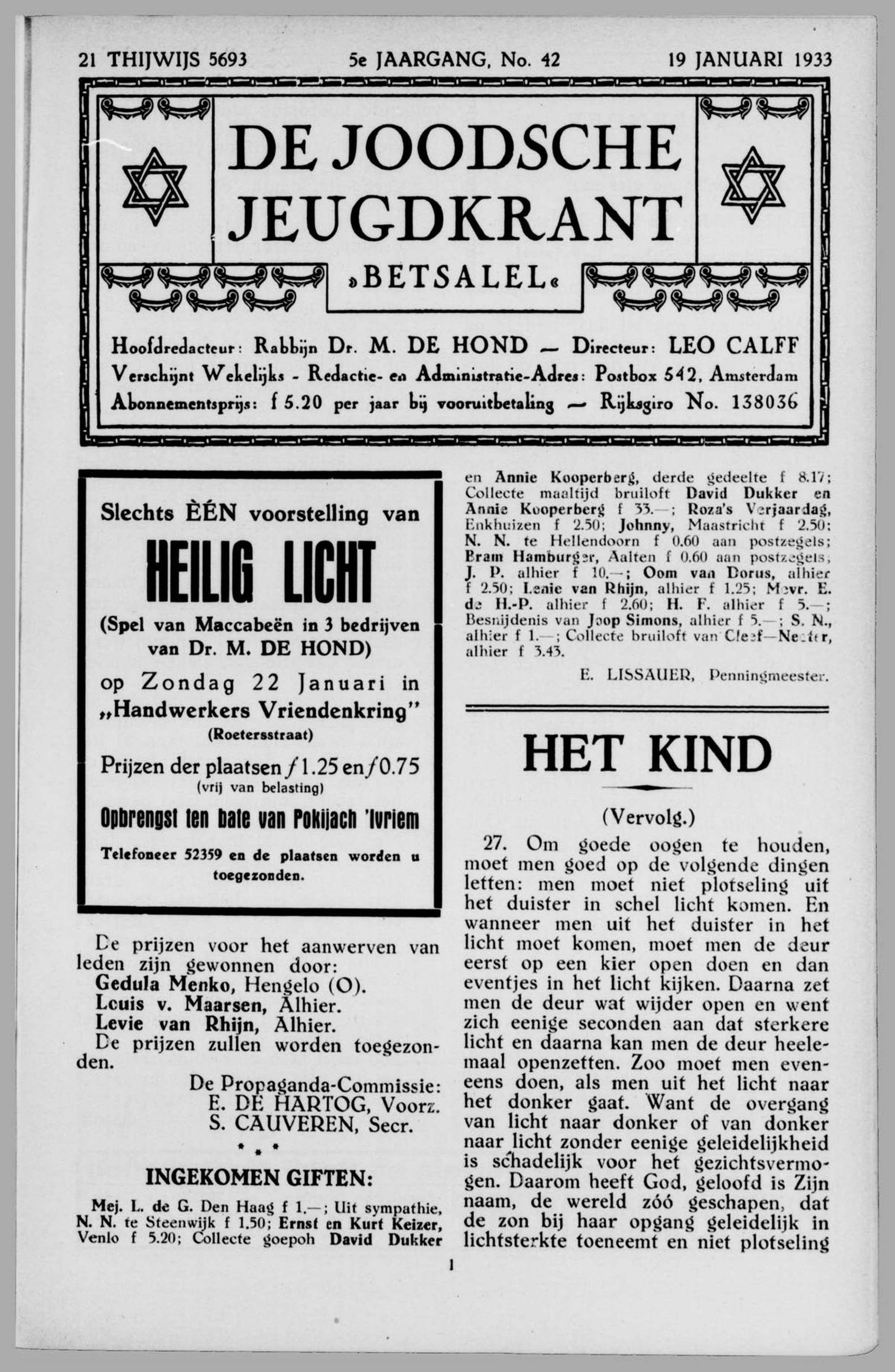
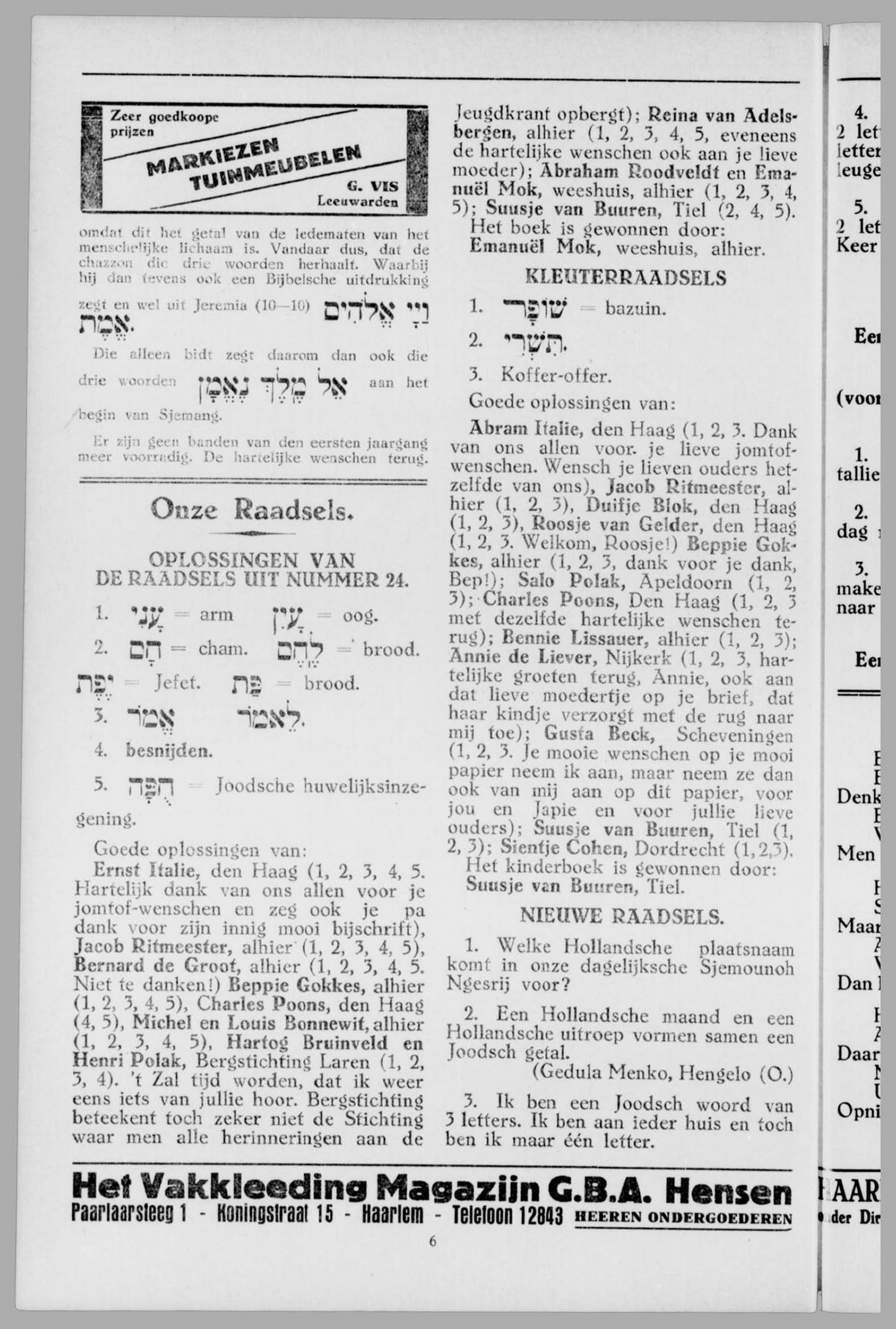
Vol. 5, No. 42 cover page (left) and Gedula's riddle in Vol. 3, No. 26 (right).. (Credit: the Delpher Archive)
Gedula's name appears multiple times in the newspaper. She was active in recruiting new members and earned prizes for her efforts (as seen on the front page on the left). The page on the right is from 1930; Gedula was 13 at the time and contributed a short riddle. It translates roughly to: "A Dutch month and a Dutch exclamation together form a Jewish number." The answer is likely the Hebrew word for 100 (מאה, Me'ah). In the Dutch Ashkenazi dialect, this is pronounced "Meioh"—a clever combination of the month of May (Mei in Dutch) and the exclamation "O!" or "Oh!".
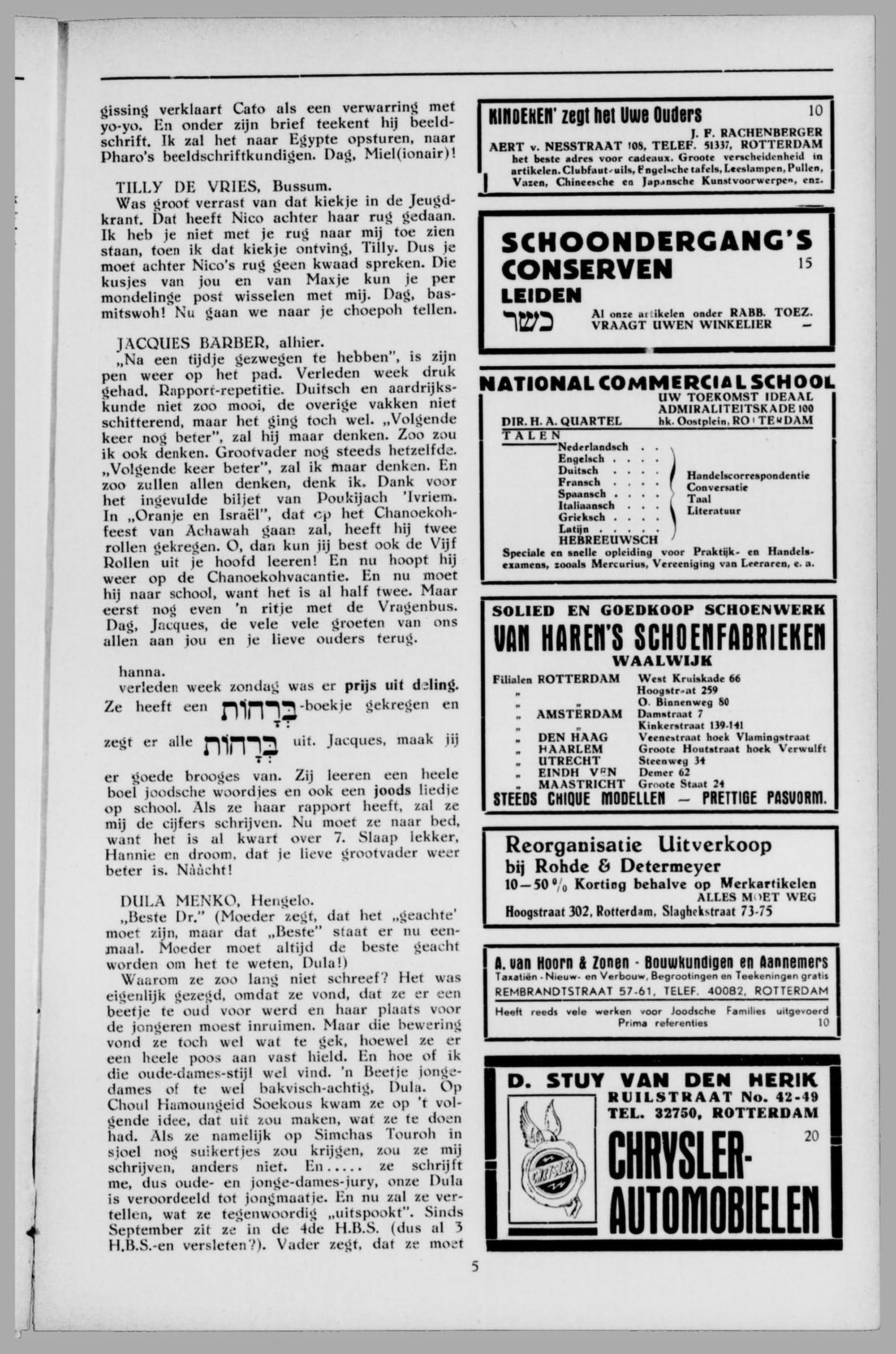
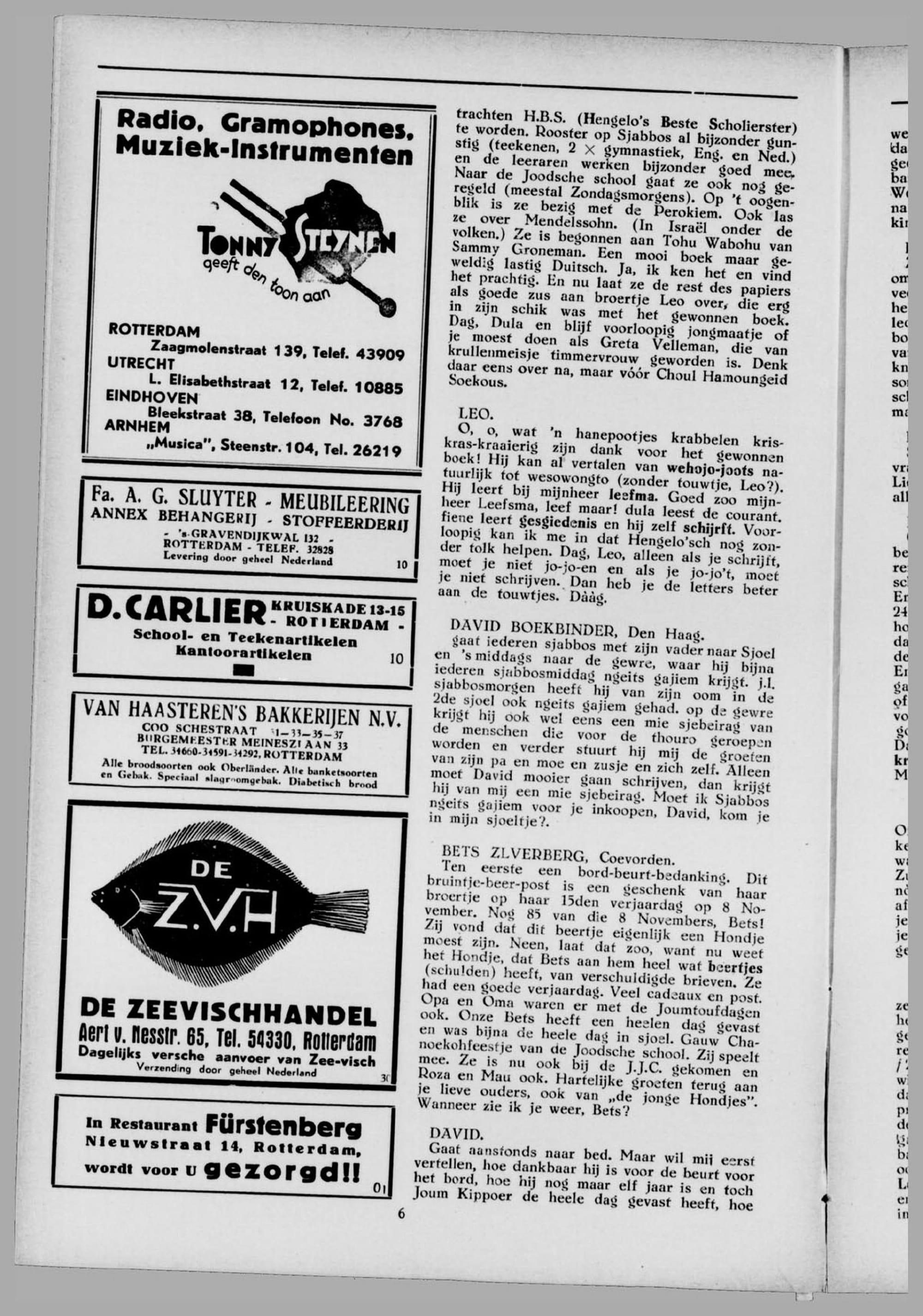
Gedula's and Leo's letters to the editor, Vol. 5, No. 35 (Credit: the Delpher Archive)
This letter was published two years later, in 1932, when Gedula was fifteen years old. She refers to herself as "Dula," short for Gedula (I have used "Gedulla" in the title, as that was how it was recorded in her later testimony). She also included a note from her younger brother, Leo - who was eight at the time - which she helped him draft. The letter reads:
Dear Dr." (Mother says that it ought to be "esteemed", but well, "Dear" is written now. Mother always has to know best, Dula!) Why did she go so long without writing? Frankly speaking, it was because she felt she was growing a bit too old for this and needed to make room for the younger ones. But she found that claim a bit too silly after all, even though she stuck to it for quite a while. And oh, do I find that old-lady style fitting! A bit young-lady-like or rather typical adolescent, Dula.
During Chol HaMoed Sukkot, she came up with the following idea that would decide what she ought to do: namely, if she received sweets in shul on Simchat Torah, she would write to me; otherwise, not.
And... she wrote to me, so our old- and young-dames-jury has condemned Dula to remain a young girl! And now she will recount what she has been "up to" lately. Since September she is in the 4th year of the H.B.S. (so she has already worn through three H.B.S. years?). Father says that she must try to become H.B.S. (Hengelo's Best Schoolgirl). Her schedule on Shabbos is already exceptionally favorable (drawing, 2 x gymnastics, English and Dutch) and the teachers are cooperating exceptionally well. She also still goes to the Jewish school regularly (usually on Sunday mornings). At the moment, she is busy with Pirkei Avot. She also read about Mendelssohn. (In 'Israel among the nations'.) She has started on Tohu Wabohu by Sammy Groneman. A beautiful book but terribly difficult German. (Editor's note: Yes, I know it and find it beautiful.)
And now, as a good sister, she leaves the rest of the paper to her little brother Leo, who was very pleased with the book he won. Bye, Dula, and remain a young companion for now, unless you should do like Greta Velleman, who went from errand girl to carpenter-woman. Think about that, but before Chol HaMoed Sukkot.
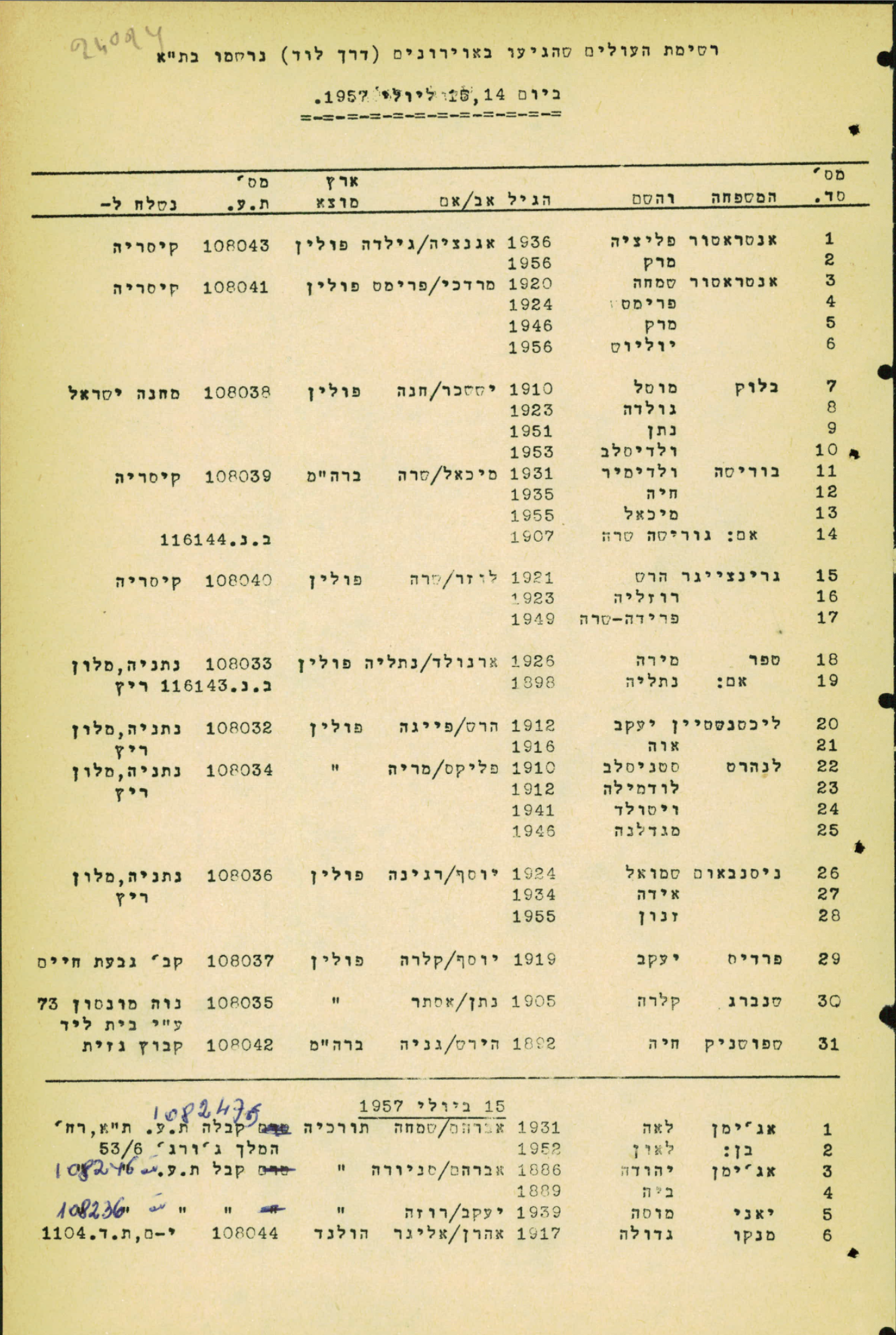
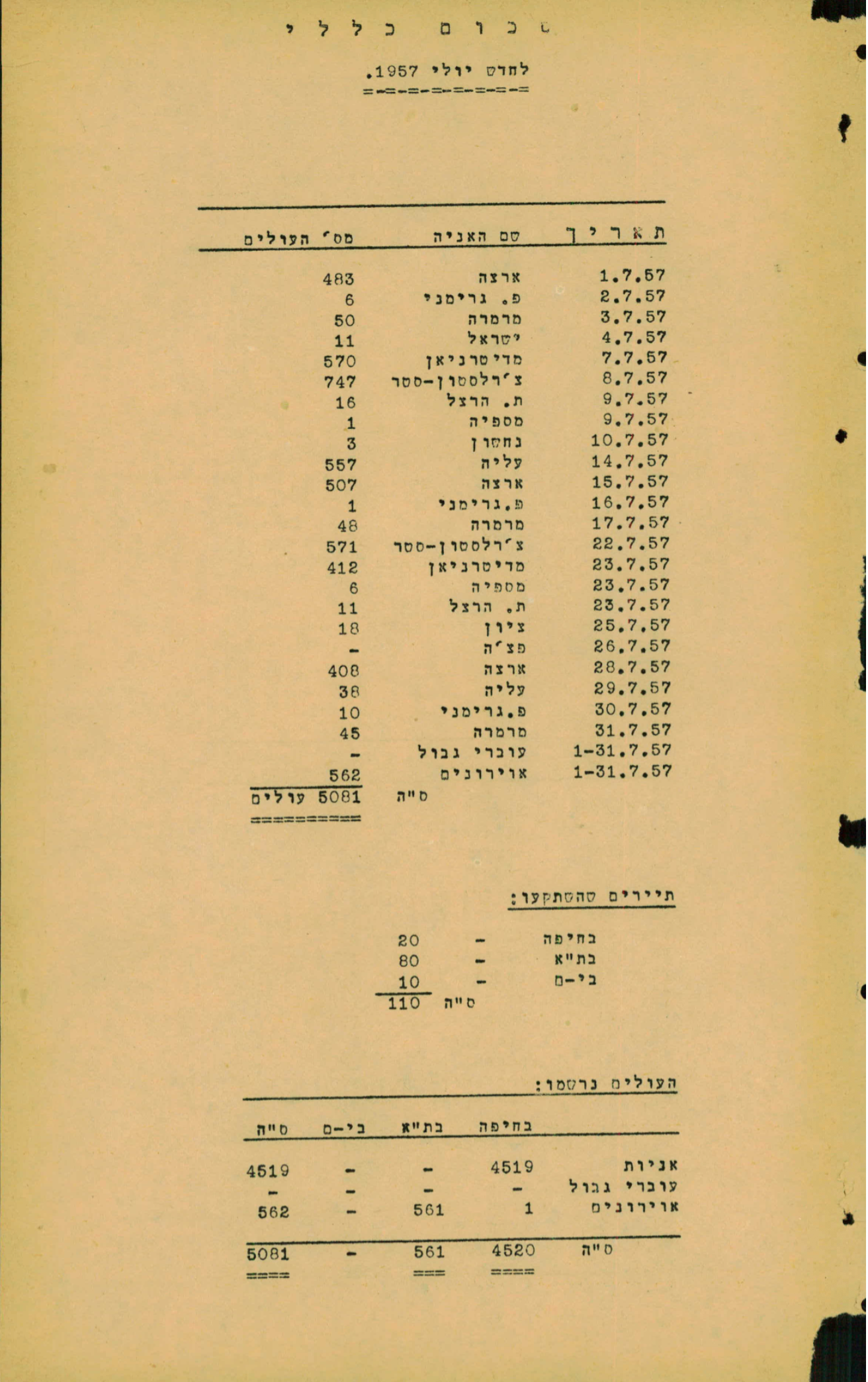
List of immigrants arriving by airplane, with Gedula's name at the bottom (left), and a summary of immigration numbers for July 1957 (right). (right). (Credit: Israeli Archive)
More than 72,000 immigrants made Aliyah to Israel in 1957. It was the peak year of immigration from Poland (the "Gomułka Aliyah"). Following the 1956 Sinai Campaign (Suez Crisis), the Egyptian government expelled almost its entire Jewish population, and thousands of Egyptian Jews arrived in Israel in 1957 as destitute refugees. Meanwhile, immigration from Morocco dropped significantly to just 8,578 in 1957. This was a sharp decline from the peak years of 1954–1956 (when tens of thousands arrived), as Morocco gained independence in 1956 and officially banned Jewish emigration, forcing future Aliyah efforts underground.
Most immigrants arrived by sea, though some came by air. The Israel State Archives hold monthly registry books used to record these arrivals. In July 1957, 4,519 immigrants arrived by sea and 562 by air. The July summary page (on the right) lists the arriving ships and the number of immigrants on each. Interestingly, the Pache—the same ship that the Rehovot delegation took to Europe—is listed as arriving on the 25th, carrying no immigrants on board. Gedula Menko appears on the list of immigrants who arrived by airplane on July 15th, registered in Tel Aviv with Aliyah ID 108044. The immigration clerk likely made a transcription mistake while copying Gedula's mother's name from a handwritten intake slip, leading to an error in the official registry; Gedula's mother was named Alida, but the printed name in the registry reads Elinor (אלינר).
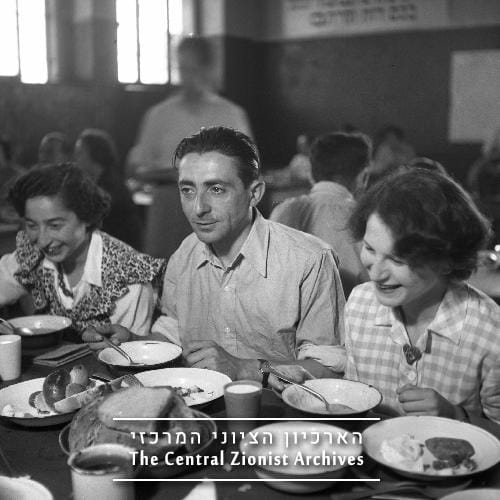
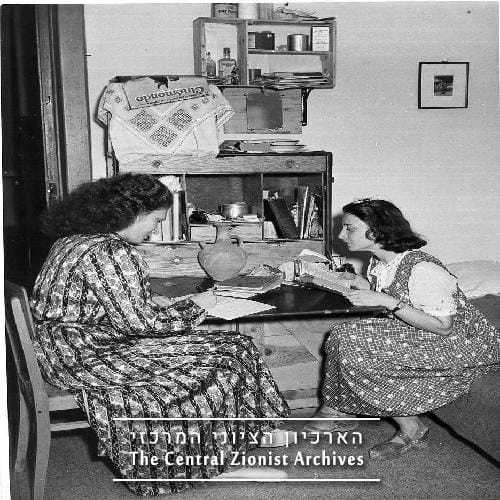
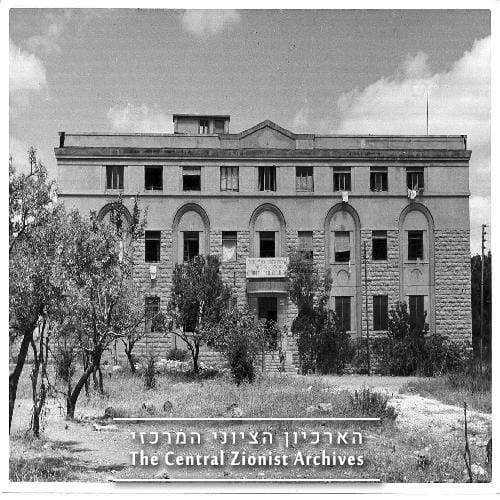
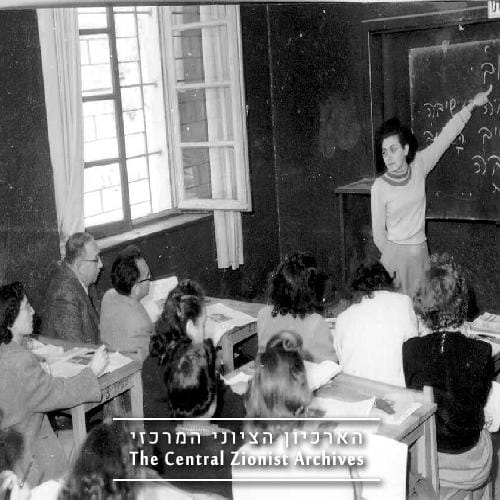
Photos from Ulpan Etsion taken in the 1950s (Credit: The Central Zionist Archives)
In her testimony, Gedula writes:
Until the end of November, I learned Hebrew in the Ulpan Etsion and I received a final diploma. I lived in the boarding house of this school. Mostly I felt quite comfortable there. Now I live in the Anglo-Saxon Hostel, where I have a small room all to myself and feel even more comfortable. Shortly, the housing matter will be solved to my full satisfaction, because I will receive a Shikun in Beth-Masmil.
Ulpan Etzion was founded on September 21, 1949, in the Baka neighborhood of Jerusalem, through the initiative of the Jewish Agency and the Ministry of Education. It became a model and foundation for establishing a network of ulpanim across the country. It is still in operation today, albeit in a different location.
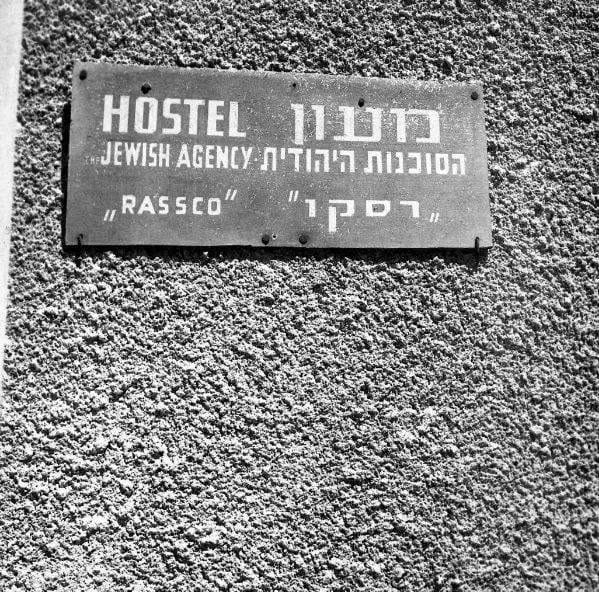
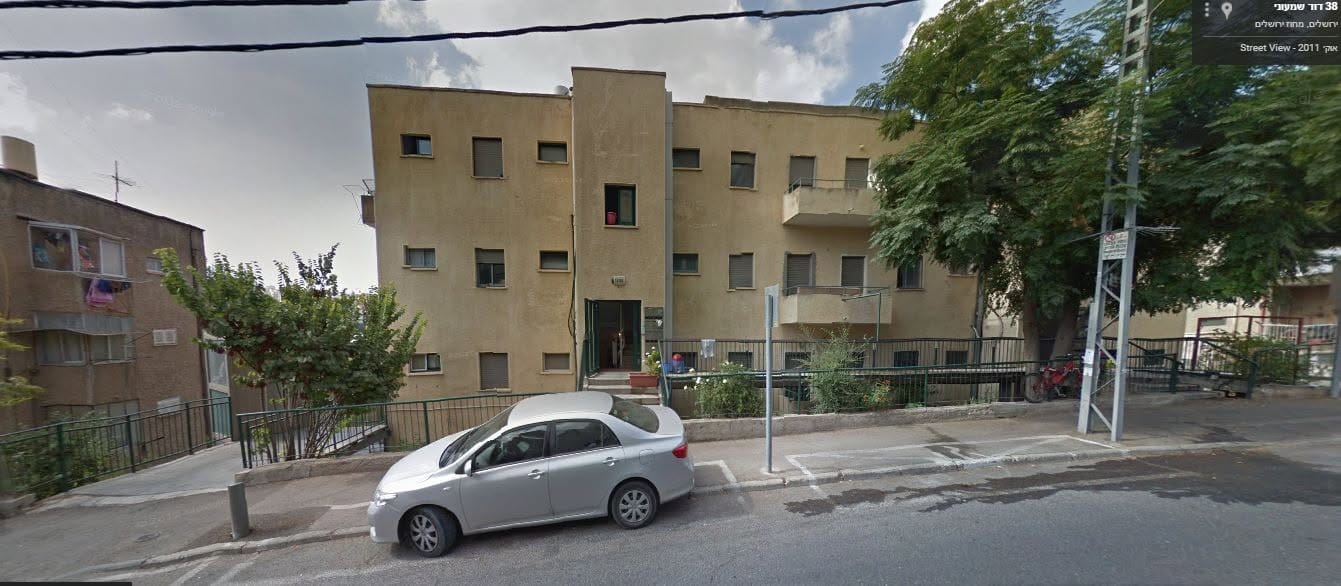
The Anglo-Saxon Hostel building today (right) and the original plaque (left) (Credit: על המקום Facebook page)
The Anglo-Saxon Hostel Gedula mentioned in her testimony is most likely the Jewish Agency's Anglo-Saxon Hostel in Shikun Rassco (bordering the Katamon neighborhood) in Jerusalem. In 1950s Israel, the term "Anglo-Saxon" was a bureaucratic and sociological label used by the Jewish Agency. While strictly it meant English speakers, the Jewish Agency practically applied this label to Western professionals and academics in general - including Dutch immigrants like Gedula. These were immigrants who were used to higher Western standards of living and whom the young state desperately wanted to retain for their professional skills. The young State of Israel sought to ease the absorption of Western professionals by establishing dedicated immigrant hostels (Me'onot Olim). Unlike the harsh, makeshift transit camps (Ma'abarot), these specialized hostels offered a softer landing. They provided proper rooms, communal dining, and a supportive environment, serving as a comfortable bridge while new arrivals secured permanent jobs and homes.
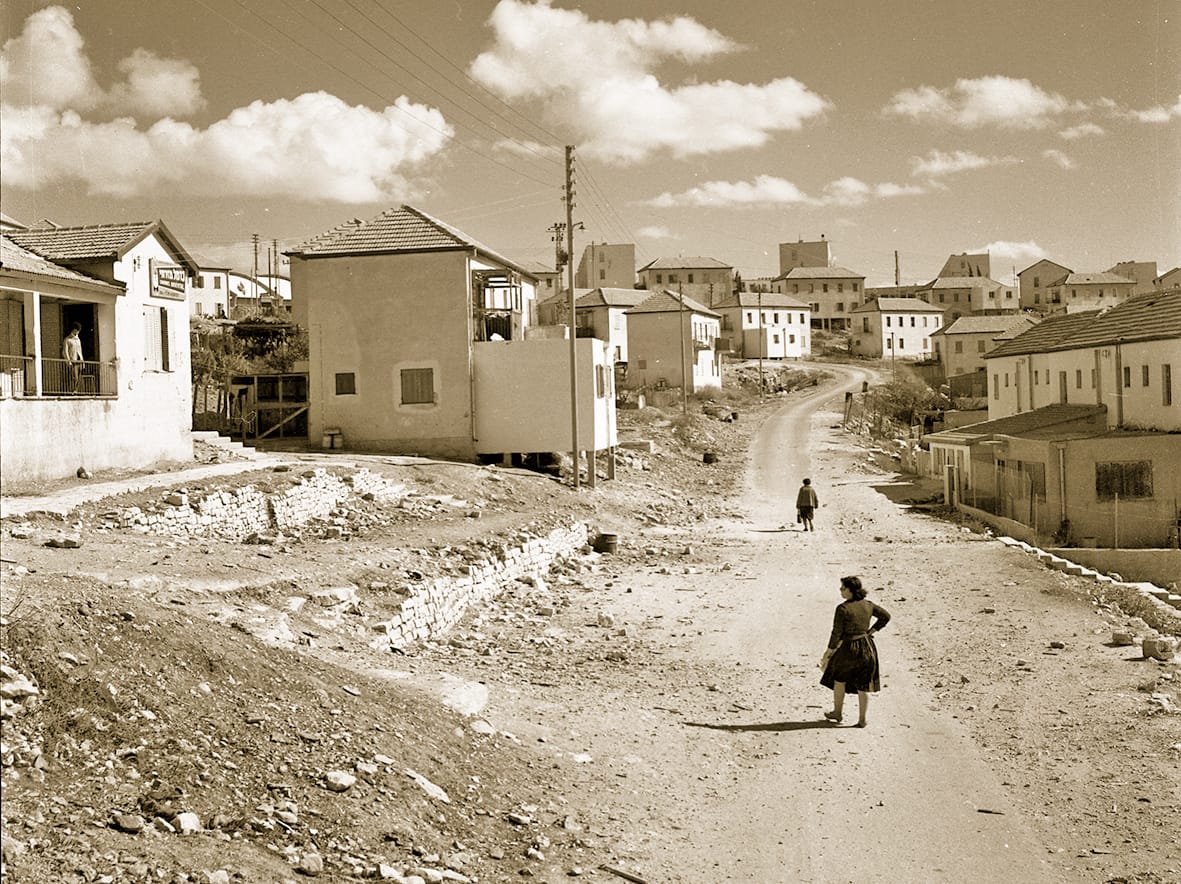
At the time she wrote her testimony, Gedula was waiting for a permanent apartment in a shikun (public housing estate) in Beth-Masmil. Today, this southwestern Jerusalem neighborhood is better known as Kiryat HaYovel. Established in the early 1950s to house the massive influx of new immigrants, it was officially renamed in 1952 to commemorate the 50th anniversary of the Jewish National Fund, though many early residents continued using the original name for years.
Leave a Comment
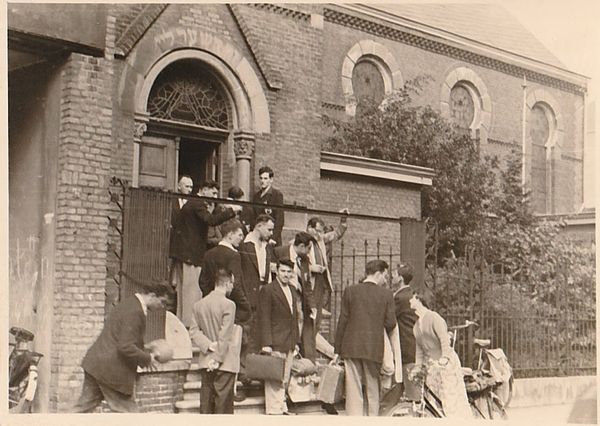
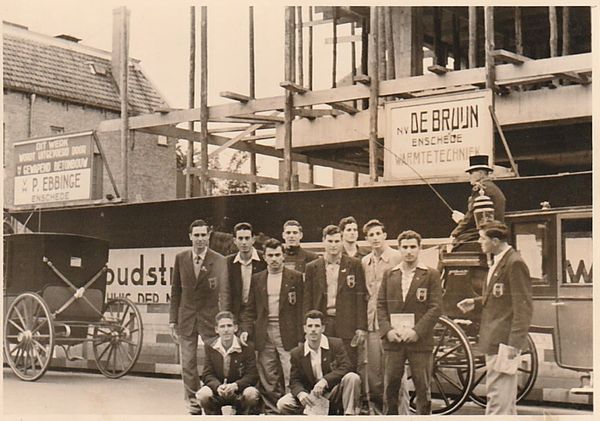
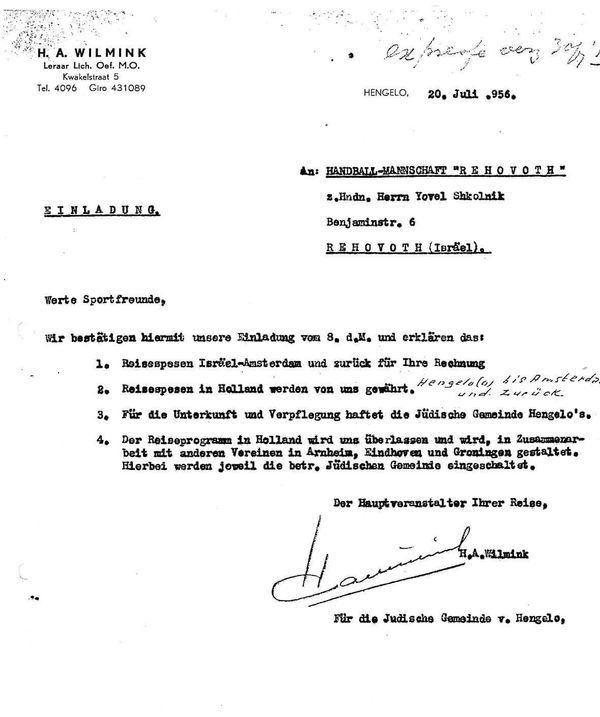
Do you recognize a player, a location, or have a story about this tour? Please share your knowledge below. You can comment using just a nickname—no account required.